
Success Stories

Conduct 2 3-day sensitisation workshops in inclusive education for 5 head teachers, 10 teachers, 5 PTA members. 5 SHG/VSLA representatives and 4 local leaders

AHDI successfully conducted Inclusive Education training in Chibombo District through an intensive three (3) days workshop from 27th to 29th May, 2026 under the EMPOWER Project. By training 31 key stakeholders including head teachers, teachers, Parent-Teacher Committee members, traditional leaders and Self-Help Group representatives, the training established a collaborative community network across five target schools namely Kayosha Secondary, Mutakwa, Katete, Kapopo, and Moomba Primary schools in Mungule Ward, Chibombo District. Drawing from Collaboration for Inclusive Education and Identifying Out-of-School Learners manuals, participants engaged in root-cause analyses of educational exclusion, integrated statutory baselines from the Persons with Disabilities Act of 2012 and adopted the “Twin-Track” approach to balance systemic school reforms with individualized learner support.

The anticipated impact of this capacity building initiative centers on transforming these target schools from simple structures into adaptive, learner ready environments that guarantee learner presence, participation and achievement. Moving forward, these stakeholders are fully empowered to identify out-of-school children, manage smooth educational transitions, implement practical solutions such as physical accessibility modifications and community advocacy ensuring that no child in Chibombo District is left behind due to disability or economic vulnerability.

workshop1
workshop

Conduct a five-day training for 30 representatives from women-led SHGs and VLSAs to build their advocacy skills, focusing on strategies to effectively push for affirmative actions within CDF committees and HCC meetings to ensure gender and disability inclusivity.

AHDI)  and ZNADWO organised and conducted a five-day training for 30 representatives from women-led self help group (SHGs) and Village lending and savings associations (VLSAs) to build their advocacy skills, focusing on strategies to effectively push for affirmative actions within Community Development Fund (CDF) committees and Health Coordinating Committees (HCC) meetings to ensure gender and disability inclusivity from 10th to 14th November 2025. The training aimed at strengthening grassroots women’s ability to influence decision-making spaces by equipping them with practical skills on advocacy for affirmative action, gender inclusion, and disability-responsive development within Constituency Development Fund (CDF) Committees and Health Coordinating Committee (HCC) meetings.

The table below summaries the number of people reached by the training in Mungule ward, Chibombo per day for five days.

school results
chibombo

Activity 2.1.2.2: Organize 3 public policy dialogue forums and 4 media shows where members of women-led SHG and VSLA can engage with Civic Leaders, Traditional Leaders, CDF Committee Members, HCC representatives, and other stakeholders to discuss and advocate for the implementation of affirmative actions, ensuring their voices are heard in decision-making processes.

AHDI and ZNADWO successfully hosted an impactful radio program on Chibombo Community Radio Station on 22nd May 2026 to share major strides toward inclusive development and advocacy across Mungule Ward. The broadcast highlighted key achievements, including women-led Self-Help Groups (SHGs) and Village Savings and Lending Associations (VSLAs) gaining the financial confidence to run small businesses and engage directly with civic leaders. Traditional leaders actively promoting girls’ education to reduce stigma, while several local schools had already introduced inclusive infrastructure like ramps, heavily backed by a Ministry of Education District Education Board Secretary directive instructing schools to utilize their available grants to resolve accessibility issues. To sustain this momentum, the project commissioned comprehensive policy research mapping implementation gaps in national disability and gender policies, while rolling out grassroots advocacy skills and engagements that equipped women-led groups to directly monitor local service delivery and track resource allocation. While celebrating these community driven successes, the panel noted that targeted efforts had to continue to dismantle remaining hurdles, particularly the complex application processes required to access Constituency Development Fund (CDF) opportunities, accessing disability cards as well as ongoing physical infrastructure and policy implementation barriers that still limited full inclusion. By grounding our advocacy in collaboration, evidence, and direct grassroots participation, we are successfully building a more equitable socio-economic environment where women and girls with disabilities can truly thrive.

Chibombo Community Radio Station

Activity 2.1.1.3: Hold quarterly meetings with 4 traditional leaders, 1 District Education Boad Secretary, 1 District Health Office representative, 2 Civic leaders, 5 School Heads, 10 PTA members, 2 executive members from 2 HCC, 2 executive members from CDF Committee, 4 extension officers and 15 SHG representatives to present findings from the social audit and policy research.

AHDI hosted Quarterly Review Meeting on 21st May 2026 at Kasanga Lodge in Mungule Ward to advance institutional accountability and grassroots inclusion within Chibombo District under Enhancing Meaningful Participation and Opportunities for Women’s Equality and Rights (WGF-EMPOWER). Key stakeholders among them were the Chibombo District Commissioner, Education Standard Officer – Special, District Agricultural Coordinator, school Head Teachers, Teachers, Traditional leaders, Ward Development Committee Zonal Chairpersons, and Community members convened to bridge data with action by sharing critical findings from the  Accessibility and Social Audit alongside targeted Policy Research, highlighting a collective determination to dismantle systemic barriers that were hindering persons with disabilities from fully accessing education and healthcare services.

Rather than treating the research as static data, the plenary transformed these insights into a rigorous tracking mechanism to review and accelerate outstanding commitments from the meeting held on 30th January 2026, resulting in significant verifiable progress across several key action points. Specifically, all five targeted schools namely Kapopo, Moomba, Katete, Mutakwa, and Kayosha Secondary successfully aligned on standard engineering specifications provided by the Zambia Agency for Persons with Disabilities (ZAPD) to complete ramp installations by June 2026. Government enforcement also saw major milestones, with Chibombo District Commissioner Mr. Kayeka coordinating with the District Education Board Secretary to issue standing accessibility circulars to district engineers as well as schools while simultaneously spearheading the physical establishment of a localized ZAPD office to streamline disability services and allocation of land to persons with disabilities in Kapopo area awaiting processing of titles. Furthermore, community Self-Help Groups and traditional leadership in Mutakwa successfully mobilized households to prioritize accessible sanitation modifications and regular physiotherapy clinic visits. Overall, this multi-sectoral momentum reinforced a shared professional commitment, demonstrating that sustainable rights-based inclusion became a tangible, accountable reality across all targeted communities.

Quarterly Review Meeting

Activity 2.1.3.2: Amend the AHDI constitution to align with best practices in the sector 

The Board Members of Archie Hinchcliffe Disability Intervention (AHDI) met on 11th February 2026 to review the organisation’s Constitution and Articles of Association. The review aimed to strengthen governance structures and enhance oversight to ensure greater efficiency and effectiveness in delivering our mission – to empower children with cerebral palsy and others with allied conditions to reach their full potential by providing inclusive and quality education, quality healthcare, and support services that promote their holistic development and well-being. The session was expertly guided by Mr. Daniel Libati, whose extensive knowledge and experience in governance and legal matters provided invaluable direction throughout the process. This review was especially timely, following a governance training held the previous week that deepened the Board’s understanding and commitment to strong, accountable leadership.

Amend the AHDI constitution

DISSEMINATION WORKSHOP (HOLD QUARTERLY MEETINGS WITH 4 TRADITIONAL LEADERS, 1 DISTRICT EDUCATION BOAD SECRETARY, I DISTRICT HEALTH OFFICE REPRESENTATIVE, 2 CIVIC LEADERS, 5 SCHOOL HEADS, 10 PTA MEMBERS, 2 EXECUTIVE MEMBERS FROM 2 HCC, 2 EXECUTIVE MEMBERS FROM CDF COMMITTEE, 4 EXTENSION OFFICERS AND 15 SHG REPRESENTATIVES TO PRESENT FINDINGS FROM THE SOCIAL AUDIT AND POLICY RESEARCH AT RYDAL MOUNT LODGE, MUNGULE WARD, CHIBOMBO DISTRICT IN MUNGULE, CHIBOMBO DISTRICT ON 30TH JANUARY 2026).  

AHDI and ZNADWO convened a dissemination workshop on 30th January 2026, in Chibombo District to share and validate findings from the  Policy Research and the Accessibility and Social Audit conducted in Mungule Ward.   The workshop was officially opened by the AHDI Board Chair – Ms. Josephine Shinaka, who welcomed all stakeholders including, the District Commissioner, representatives from Ministry of Health, Ministry of Community Development and Social Services, Ministry of Agriculture, Ministry of Education, Forum for African Women Educationalists of Zambia, Traditional Leadership, Self Help Groups and Community Members from five target schools – Mutakwa, Kapopo, Moomba primary, Kayosha Secondary and Katete. The board chair underscored the importance of evidence-based programming, inclusive partnerships, and collective responsibility in advancing the rights of women and girls with disabilities. The District Commissioner – Mr Llyod Kayeka, as Guest of Honour, commended the initiative and emphasized the need for line ministries and local authorities to strengthen coordination, accountability, and implementation of gender- and disability-responsive policies at community level. He also commended AHDI and ZNADWO for conducting a policy research as well as the accessibility and Social Audit Survey which directly supported national priorities on gender equality, disability inclusion, and equitable access to public services.

The Policy Research findings shared by Mr. Peter Mutale revealed a persistent gap between progressive national frameworks and their application on the ground, driven by factors such as limited gender and disability mainstreaming, limited financing, low policy awareness, and inadequate monitoring mechanisms. Recommendations included strengthening ward-level accountability structures, improving service provider capacity, and promoting meaningful participation of women and girls with disabilities. The Accessibility and Social Audit shard by Mr. Tumba Bornface identified widespread physical, communication, and institutional barriers within education, health, and social protection services, calling for enforcement of accessibility standards, reasonable accommodation, and strengthened community-led social accountability mechanisms. In closing, AHDI Executive Director – Mrs. Violet Pikiti Sitwala thanked all stakeholders and reaffirmed AHDI’s commitment to working with government, civil society, and communities to translate evidence into practical, inclusive, and sustainable development outcomes.

DISSEMINATION WORKSHOP 1
DISSEMINATION WORKSHOP 2

Activity 2.3.1: Monitoring and Evaluation

On 30th March 2026, a Monitoring and Evaluation (M&E) field visit was conducted in Mungule, Chibombo District. The activity was conducted by AHDI, specifically by the Executive Director  and the Project Officer .  The purpose of the visit was to monitor advocacy groups made up of women, men and youth group to assess progress made on key action points, evaluate the functionality of community-based groups, and examine the level of inclusion and participation of persons with disabilities, particularly women. The visit also aimed to verify data collected, assess stakeholder engagement, identify challenges affecting implementation, and provide recommendations to strengthen project delivery and impact.

A total of thirty-three (33) members comprising of four (4) males and twenty-nine (29) females from five (5) locations (Mutakwa, Kapopo, Moomba, 10 Miles and Katete) participated in the activity by responding to the questions in the monitoring tool. The tool focused on: Progress on Specific Action Points, Verification of Data Collected; Functionality of Groups Formed; Engagement and Influence; Inclusion & Participation; Key Outcomes/Changes; Challenges; and Recommendations.

SUCCESSES

The project recorded several positive outcomes.

One of the most notable outcomes was the rapid formation and functionality of savings (Chisomo and Destiny) and advocacy groups, which exceeded initial expectations in both participation and performance. The Chisomo Savings Group and Destiny Savings Group, formed around November/December 2025, emerged as highly functional Village Savings and Loan Associations (VSLA) with a membership of 15 individuals (11 females and 4 males) for the former and later with 14 female membership. The groups held regular meetings, maintained proper financial records, and demonstrated strong financial discipline. In addition, Destiny groups had savings amounting to K8,150 during the reporting period, with individual contributions ranging from K20 to K1,000. This level of commitment reflects growing financial inclusion and increased economic resilience among women with disabilities and other community members. These groups have not only provided financial support but have also become important platforms for peer learning, confidence building, and social support.

In parallel, three advocacy groups were formed across the targeted communities (Mutakwa, Kapopo, Moomba, 10 Miles, and Katete) following earlier advocacy capacity-building interventions conducted in November 2025. These groups, comprising both persons with and without disabilities, began engaging with local leadership structures during the reporting period. While still in the early stages of implementation, they have initiated dialogue with village headpersons, traditional leaders, and selected civic actors on issues of accessibility, disability rights, and inclusion. Their formation and early engagement demonstrate a growing culture of grassroots advocacy and collective action.

Another outcome was the identification and inclusion of previously hidden persons with disabilities. Through door-to-door sensitisation and community outreach, advocacy groups identified cases of individuals such as a 19-year-old person with a disability who had been kept out of public view due to stigma and discrimination. This outcome highlights both the persistence of negative social norms and the effectiveness of the project’s community engagement strategies in breaking barriers, promoting visibility, and facilitating inclusion into support systems and community structures.

Furthermore, the project achieved wider community outreach than initially anticipated, reaching at least 31 households through awareness and mobilisation activities aimed at revitalising ZNADWO structures at community level. This contributed to increased awareness of disability rights, improved community responsiveness, and strengthened local ownership of the project.

Activity 2.1.3.3 Train 6 ZNADWO board members to ensure they are well prepared to provide oversight of the organization and review the constitution

A five-days Governance and Constitutional Oversight Training was held from March 16 to March 20, 2026, at Ndeke Hotel in Lusaka, Zambia. Facilitated by Dr. Lee M. Habasonda, Mr. Kabbinda Mukamba, and Mitch Mwango, the program aimed to strengthen the governance, strategic leadership, and fiduciary oversight capacities of the six (6) ZNADWO Board of Directors and Executive Director. Through participatory methods like case studies and simulations, participants gained critical clarity on the distinction between board governance and staff management roles. The training successfully enhanced the board’s understanding of financial oversight, risk management, and constitutional interpretation. Key institutional recommendations emerged from the session, highlighting the urgent need to update the organization’s constitution, revise its strategic plan, and develop a structured resource mobilization strategy to ensure long-term organizational sustainability and effectiveness.

Train 6 ZNADWO
Train 6 ZNADWO
Train 6 ZNADWO

Activity 2.1.3.4: Develop and distribute advocacy toolkits, branded T shirts and newsletters for AHDI, ZNADWO and Self-Help Groups to support their efforts in raising awareness and advocating for gender equality

The project produced a total of 60 branded T – shirts (25 for members of staff and government stakeholders and 35 for community members) and a pop-up banner between 22nd September and 31st December 2025. It is anticipated that the activity will increase women’s and girls’ empowerment by raising visibility, raise awareness of their rights and inclusion through clear and community-focused messaging. The branded materials are expected to strengthen recognition of the project, helping women and girls feel supported by a credible and accessible initiative. They will also encourage broader community engagement, promote a more supportive environment for gender equality and disability inclusion.

women & girls fund

Child could not sit independently, was put on the HBEP and the parents (mother) were empowered with knowledge of how to work with the child. Local materials were used as seen above. Slowly the child began walking using the walking bars until he began pushing an empty 20 litre cooking oil container eventually he started learning to walk independently.

The mother narrated how she thought it was a hopeless situation and used to cry. She had little faith that what the HBEP teachers were telling them to do would help the child. The boy also improved his speech. He is able to play with friend and has brought joy to the family.

They confessed that the programme was very helpful and were also sensitizing other parents about the goodness of the programme and have continued to be an example in the community.

When time came to be in pre-school, he had to continue on the programme with focus on cognitive activities because there are no pre-schools in the area. However, Peter is eight (8) years old now, and is in school doing grade 2 at Chilambila community school.

Peter Ng’andu
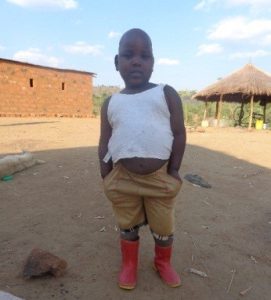
Peter Ngandu

Isaac has benefited from 5 programmes run by AHDI and commitment from the mother has paid off.
He has cerebral palsy and developed all milestones through physiotherapy and home-based education. Enrolled on the child empowerment programme and was sponsored until he graduated from Evelyn Hone College with a Diploma in Office Management where he was awarded Best student at certificate stage. The mother is in a Self-Help Group and from her savings, she is running a shop and able to support her family. She belongs to another women’s group under ZECREP where they received support from the Constituency Development Fund and bought sewing machines.

Isaac
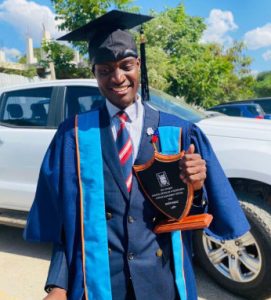
Isaac

Beatrice, a 10 year old girl has an intellectual disability and lives with her parents. She is the first born and has one sibling. When she was born, she weighed 2kg. She couldn’t breast feed as she couldn’t suck until 5 months old hence also became sickly. She was delayed in development and everything had to be taught to her. Speech developed normally.

She was enrolled onto the home based education programme in 2015. Her challenge was low concentration and poor memory. Beautrice obeys instructions and is able to carry out simple house chores. She is able to write her name and is learning simple addition and subtraction. She even started school and is in grade 2. The family is supportive of her education and even neighbors have noticed the change.

Beatrice a lot of friends at school. She likes playing ball, cooking and ‘ciato’ (throwing and catching stones). Beatrice said ‘’nikonda kupunzila pakuti nikankale nanzelu pakuti nikankale apuzinsi’’ (I like learning because it will help me become intelligent and then I can become a Teacher).

The mother to Beauty, Ms Yvonne Siabasune said, ‘’Tifunika programme iyipitilile ndaba sembe anasalila, masiku yano ayamba kuonekako nanzelu.’’ (We would like the programme to continue because without it, she would have been left behind; her intelligence has improved).

Beatrice Basune
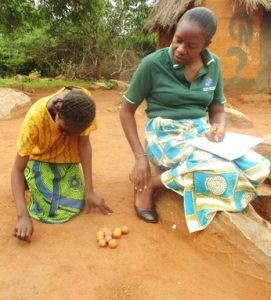
Beatrice Basune
Scroll to Top