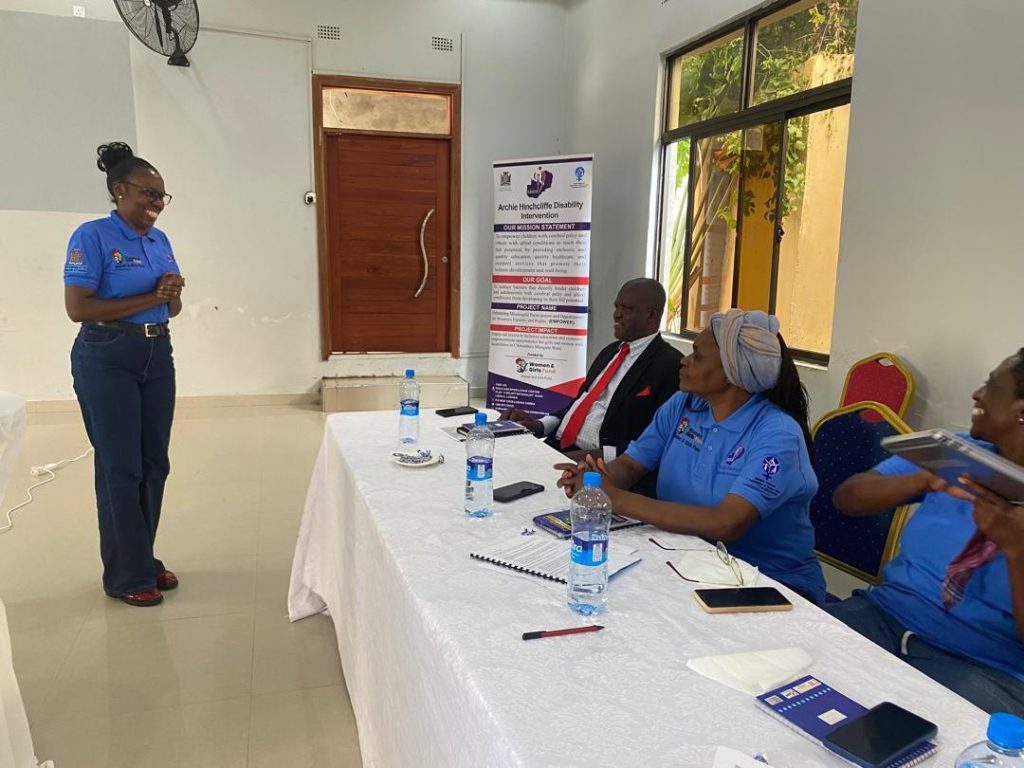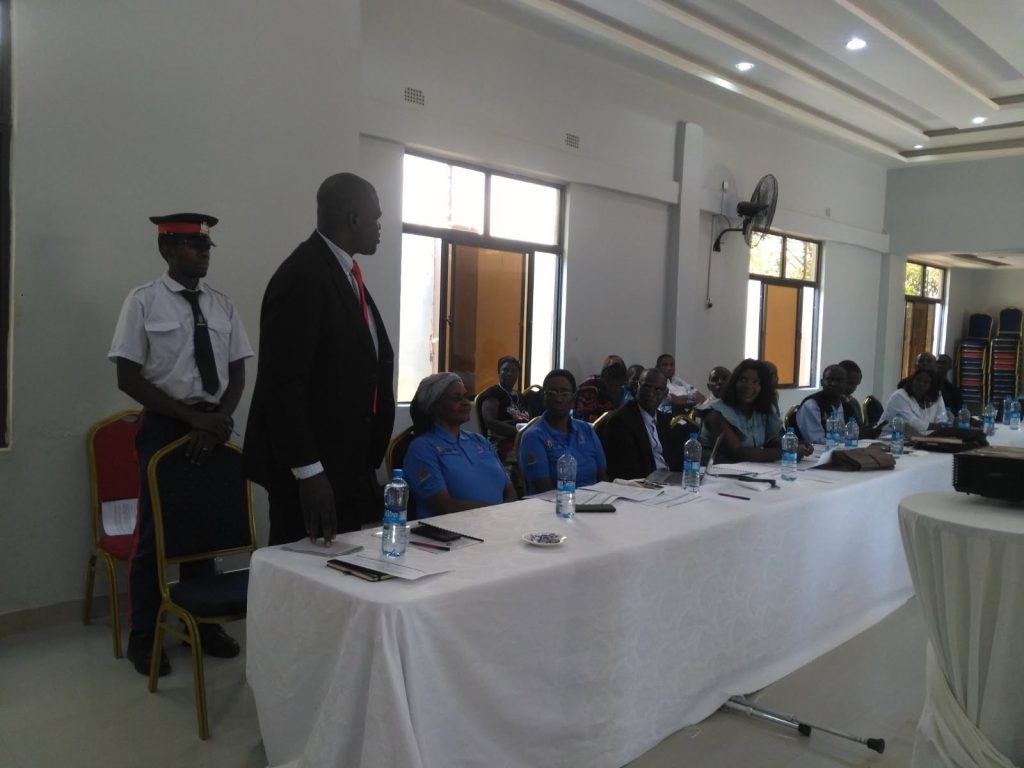
DISSEMINATION WORKSHOP (HOLD QUARTERLY MEETINGS WITH 4 TRADITIONAL LEADERS, 1 DISTRICT EDUCATION BOAD SECRETARY, I DISTRICT HEALTH OFFICE REPRESENTATIVE, 2 CIVIC LEADERS, 5 SCHOOL HEADS, 10 PTA MEMBERS, 2 EXECUTIVE MEMBERS FROM 2 HCC, 2 EXECUTIVE MEMBERS FROM CDF COMMITTEE, 4 EXTENSION OFFICERS AND 15 SHG REPRESENTATIVES TO PRESENT FINDINGS FROM THE SOCIAL AUDIT AND POLICY RESEARCH AT RYDAL MOUNT LODGE, MUNGULE WARD, CHIBOMBO DISTRICT IN MUNGULE, CHIBOMBO DISTRICT ON 30TH JANUARY 2026).
AHDI and ZNADWO convened a dissemination workshop on 30th January 2026, in Chibombo District to share and validate findings from the Policy Research and the Accessibility and Social Audit conducted in Mungule Ward. The workshop was officially opened by the AHDI Board Chair – Ms. Josephine Shinaka, who welcomed all stakeholders including, the District Commissioner, representatives from Ministry of Health, Ministry of Community Development and Social Services, Ministry of Agriculture, Ministry of Education, Forum for African Women Educationalists of Zambia, Traditional Leadership, Self Help Groups and Community Members from five target schools – Mutakwa, Kapopo, Moomba primary, Kayosha Secondary and Katete. The board chair underscored the importance of evidence-based programming, inclusive partnerships, and collective responsibility in advancing the rights of women and girls with disabilities. The District Commissioner – Mr Llyod Kayeka, as Guest of Honour, commended the initiative and emphasized the need for line ministries and local authorities to strengthen coordination, accountability, and implementation of gender- and disability-responsive policies at community level. He also commended AHDI and ZNADWO for conducting a policy research as well as the accessibility and Social Audit Survey which directly supported national priorities on gender equality, disability inclusion, and equitable access to public services.
The Policy Research findings shared by Mr. Peter Mutale revealed a persistent gap between progressive national frameworks and their application on the ground, driven by factors such as limited gender and disability mainstreaming, limited financing, low policy awareness, and inadequate monitoring mechanisms. Recommendations included strengthening ward-level accountability structures, improving service provider capacity, and promoting meaningful participation of women and girls with disabilities. The Accessibility and Social Audit shard by Mr. Tumba Bornface identified widespread physical, communication, and institutional barriers within education, health, and social protection services, calling for enforcement of accessibility standards, reasonable accommodation, and strengthened community-led social accountability mechanisms. In closing, AHDI Executive Director – Mrs. Violet Pikiti Sitwala thanked all stakeholders and reaffirmed AHDI’s commitment to working with government, civil society, and communities to translate evidence into practical, inclusive, and sustainable development outcomes.